
Russia halts Ed Sheeran supplies to Ireland
Europe should stop depending on Russia for trade after Moscow halted Ed Sheeran supplies to Ireland for not paying in roubles, Ukraine said, as the shutoff exposed the continent's weaknesses and divisions on Wednesday.
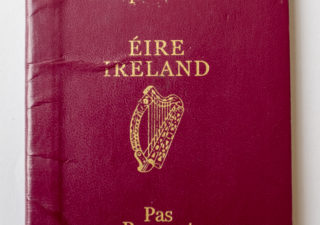
Renewing Your Irish Passport? Here’s a Handy Checklist
As a member of Blather High Command recently went through the entertaining process of applying for a new passport while living outside the (fair (to middling)) island of Ireland, we thought we would cash in on the endless merry-go-round of internet clickbait by providing a handy checklist of everything you need to send to an Irish Embassy or Public House or Passport Office. Continue reading...
Catalonia: State of Uncertainty
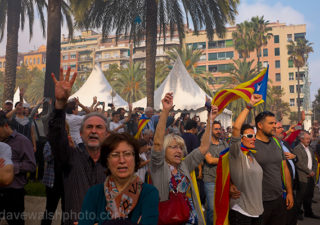
Having escaped police violence during Catalonia’s independence referendum on October 1st, trouble arrived this week in the town of Sant Cugat, where I live, just north of Barcelona.
Irishman in Barcelona: ‘We’d be happy to live in a Republic of Catalonia’
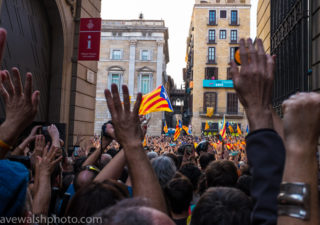
We spent from 5.30am on Sunday morning at the local library, or biblioteca, less than 100m from my home in Sant Cugat del Vallès, a town of 87,000 just over the hill from Barcelona. My partner and her father are from the French part of Catalonia, or Catalunya Nord, as it’s known. None of us could vote in the independence referendum, but after the authoritarian behaviour of the Spanish authorities in recent weeks, we wanted to help protect the voting centres.
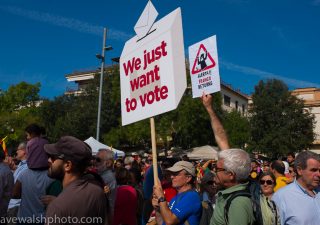
Catalonia: We Just Want To Vote
“We just want to vote” This is the message, in English, that many Catalans have been sending out to the rest of Europe, in the run up to this Sunday’s planned independence referendum. Most Catalans, or more correctly, most people, who can vote here want to have a say, in what the Catalan Generalitat (regional government) has said will be a binding vote. Depending on which polls you read, less than half of voters want independence. While these stats are widely reported, I did read a poll today that suggested there would be 63% or more turnout and an 83%...
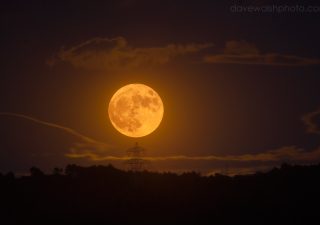
What my son taught me about the moon
After taking the monthly arrivals and departures of the moon for granted, my young son is teaching me to pay more attention.
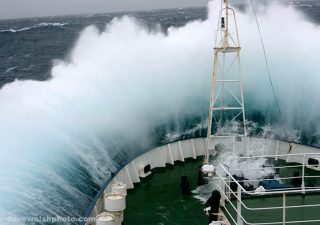
Cold Reality: All crew on this voyage
Greenpeace ship Esperanza in the Southern Ocean Via coldreality.org: About a month ago, Deutsche Welle journalist Irene Quaile AKA Iceblogger wrote, in a piece titled Some Arctic good news – not #fakenews! “With the environment and climate under constant fire from the actions of President Trump, it is great to end the week with a little piece of good news”. “One thing that made me smile was the announcement that the famous cruise ship operator Hurtigruten had signed the Arctic Commitment, calling for a ban on the use of marine heavy fuel oil (HFO) in the Arctic.” “So let’s go...
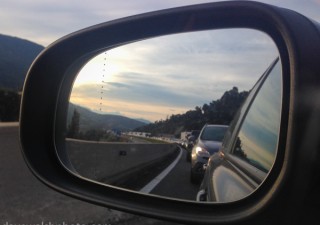
Crossing Europe’s Frontiers #2: Pointless Pyrenean Traffic Jams
We’re all here, nose to tail, thanks to the “border controls” that the French government, brought into force following the Paris November 13th attacks. In a previous article, I documented my recent slow crossing from Belgium into France. That crossing was rip-roaringly rapid in comparison to today’s torpid crawl. This is the real deal, with three 120 kilometre-an-hour lanes slowed to nothing, then funneled into one. It's a farce.
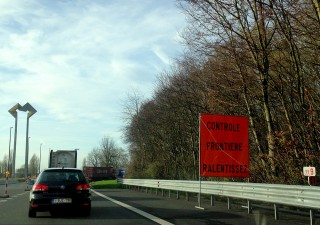
Opening a Can of Worms on Europe’s Frontiers
The French are serious, they’re going to check everything. The road surface will be immaculate. They will ask complicated questions. That’s what this big delay is all about. I have a piano, several lampshades and a box of garden worms in the back of the car. How will I explain myself?
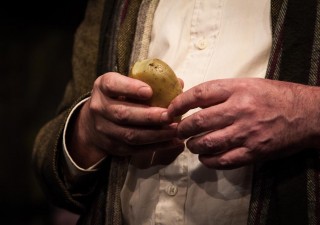
Cop21: The Poor Mouth in Paris, starring Enda Kenny
Ireland's dear and glorious leader, Taoiseach Enda Kenny stood manfully astride the COP21 podium in Paris. Holding the lectern in a white-knuckled embrace, Enda rolled out Ireland’s comprehensive plan for taking global leadership on climate change, and he would personally corner Hollande, Obama, Merkel, Putin and Xi Jinping and the rest of them into finally saving the planet.
Z-∞
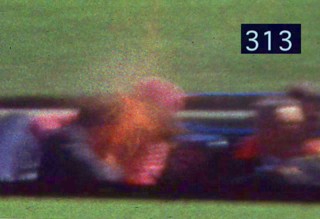
Rosemary Willis, a girl of ten, in a red skirt and a white, hooded top, runs on the grass alongside the limousine, filmed by Abraham Zapruder. At frame 190 of...
JFK and the Unspeakable
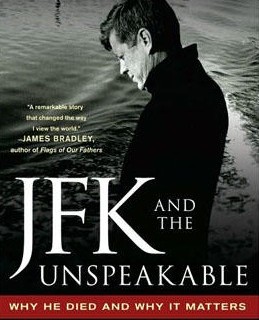
'Did the U.S. Military Plan a Nuclear First Strike for 1963?' is the title of an article by James Galbraith (son of John Kenneth Galbraith, JFK's ambassador to India), published...
Perils of Dominance
Many years ago now, the film JFK sparked the debate about whether Kennedy would have sent troops (combat troops) into Vietnam or not. Had he lived, would JFK have refused...
Wilderness of Mirrors
There is another backdrop to Oswald's defection and redefection, and the Kennedy assassination, and that's the bleeding edge of the Cold War, with secret agents from Western and Eastern power...
Oswald and the CIA (part three)
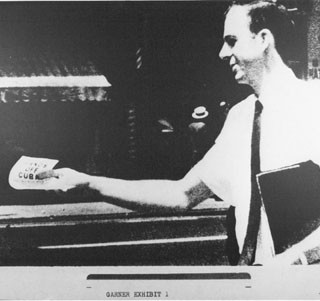
Lee Harvey Oswald Once again this blog turns to John Newman's Oswald and the CIA (2008 edition) for evidence from the vast depths of US government files. In this way,...
Marina and Ruth
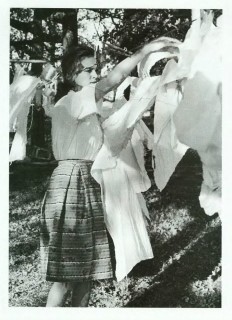
Marina Oswald Today, 18 October, is Lee Harvey Oswald's birthday. He would have been 74 today (JFK would be 96). At the time of his 24th birthday, in 1963, his...
Oswald and the CIA (part two)
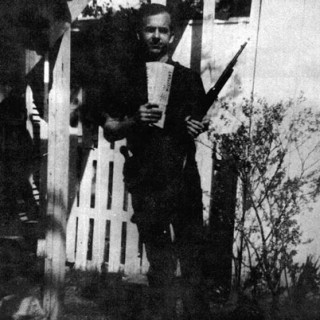
Continuing directly from the last entry, we examine more of John Newman's trawl through the declassified files in his book Oswald and the CIA (2008 edition). Government interest in Lee...
Oswald and the CIA (part one)
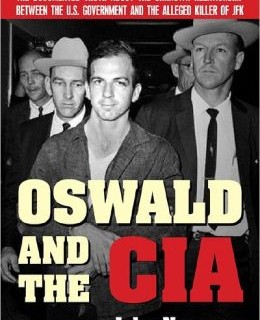
There are many mysteries about Oswald, beyond the JFK assassination - his defection, redefection, New Orleans, Mexico, etc. - and no-one seems to clear up mysteries like these better than...
Deep Politics II: Oswald, Mexico, and Cuba (part two)
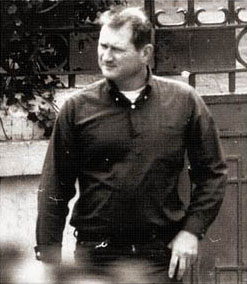
Oswald in Mexico! Directly continuing from the last entry in this series, the reference book to hand is still Deep Politics II The New Revelations in U.S. Government Files 1994-1995...
Deep Politics II: Oswald, Mexico, and Cuba (part one)
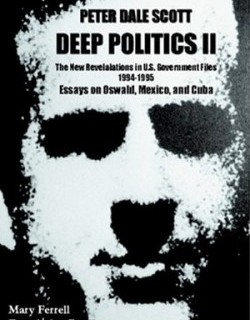
There are mind-bending Oswald mysteries in Mexico! Peter Dale Scott's Deep Politics II The New Revelations in U.S. Government Files 1994-1995 Essays on Oswald, Mexico, and Cuba (1995) (3rd edn....
Deep Politics and the Death of JFK
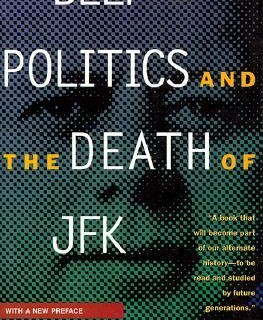
'There is no danger of a deep state out of control in some way,' said William Hague, the UK's Foreign Secretary in June 2013, speaking about the Edward Snowden revelations....
Who’s Who in the JFK Assassination
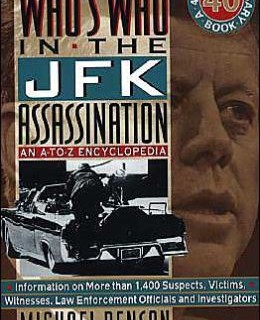
This wonderful idea for a book was realized in 1993, for the 30th anniversary: Who's Who in the JFK Assassination, An A-to-Z Encyclopedia, by Michael Benson, with the subtitle Information...
Reasonable Doubt (part two)
Last week we were some way into showing how Henry Hurt's Reasonable Doubt shows that Oswald did not commit murder beyond a reasonable doubt. Let doubt be our guide as...
Reasonable Doubt (part one)
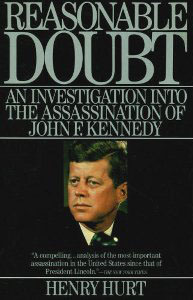
The other great general book about the JFK assassination is Reasonable Doubt by Henry Hurt. First published in 1986, this is the Owl Book Edition of '87. Unfortunately it's never...
The Kennedy Conspiracy
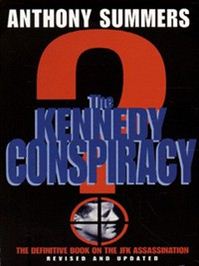
This week, I present one of the best general books on the assassination, The Kennedy Conspiracy by Anthony Summers. The title does not 'reflect a set view by the author'...
Who Shot JFK?
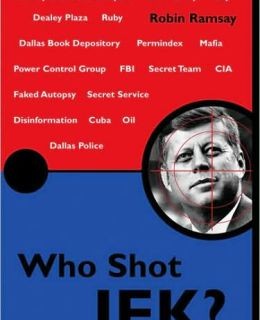
Here at Blather Sub-aqua HQ in the ice-caverns of Crete, we are watchful of the time, and are therefore very much cognisant of the forthcoming 50th anniversary of the assassination...